



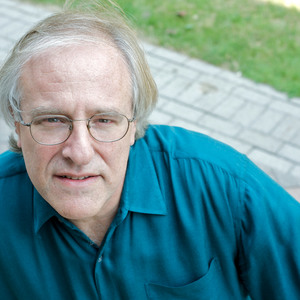

Harry Reis
Professor Reis studies the nature and impact of the relationship context of human behavior. He is broadly interested in the processes that regulate behavior, thought, and affect in close relationships, as well as the impact of these processes on various outcomes, notably including health and psychological well-being. Much of his research is based on daily event recording, in which research participants keep detailed records of their on-going social activity, which are then used to examine interesting questions with precise data. A recent focus of his research has involved the distinction between appetitive and aversive processes -- that is, factors that regulate the pursuit of and participation in positive interactions, as distinguished from those that relate to conflict and other types of negative interactions.
Professor Reis is particularly interested in intimacy, capitalization, and emotion regulation.
Primary Interests:
- Close Relationships
- Emotion, Mood, Affect
- Health Psychology
- Interpersonal Processes
Research Group or Laboratory:
- University of Rochester Relationships Laboratory
Note from the Network: The holder of this profile has certified having all necessary rights, licenses, and authorization to post the files listed below. Visitors are welcome to copy or use any files for noncommercial or journalistic purposes provided they credit the profile holder and cite this page as the source.
Image Gallery

Video Gallery

The Mars vs. Venus Theory of the Sexes Comes Back to Earth
Five Questions About the World After Covid
Books:
- Kelley, H. H., Holmes, J. G., Kerr, N., Reis, H. T., Rusbult, C. E., & Van Lange, P. A. M. (2003). An atlas of interpersonal situations. New York: Cambridge University Press.
- Reis, H. T., & Judd, C. (Eds.). (2000). Handbook of research methods in social and personality psychology. New York: Cambridge University Press.
- Reis, H. T., & Sprecher, S. K. (Eds.). (2009). Encyclopedia of human relationships. Thousand Oaks, CA: Sage Publications.
- Vangelisti, A. L., Reis, H. T., & Fitzpatrick, M. A. (Eds.). (2011). Stability and change in relationships. New York: Cambridge University Press.
Journal Articles:
- Birnbaum, G. E., Reis, H. T., & Mikulincer, M. (2006). When sex is more than just sex: Attachment orientations, sexual experience, and relationship quality. Journal of Personality and Social Psychology, 91, 929-943.
- Finkel, E. J., Eastwick, P. W., Karney, B. R., Reis, H. T., & Sprecher, S. (2012). Online dating: A critical analysis from the perspective of psychological science. Psychological Science in the Public Interest, 13, 3-66.
- Lee, S., Rogge, R. D., & Reis, H. T. (2010). Assessing the seeds of relationship decay: Using implicit evaluations to detect the early stages of disillusionment. Psychological Science, 857-864.
- Reis, H. T. (2007). Steps toward the ripening of relationship science. Personal Relationships, 14, 1-23.
- Reis, H. T. (2008). Reinvigorating the concept of situation in social psychology. Personality and Social Psychology Review, 12, 311-329.
- Reis, H. T. (in press). A history of relationship research in social psychology. In A. Kruglanski and W. Stroebe (Eds.), Handbook of the History of Social Psychology.
- Reis, H. T., & Aron, A. (2008). Love: What is it, why does it matter, and how does it operate? Perspectives on Psychological Science, 3, 80-86.
- Reis, H. T., & Collins, W. A. (2004). Relationships, human behavior and psychological science. Current Directions in Psychological Science, 13, 233-237.
- Reis, H. T., Collins, W., & Berscheid, E. (2000). The relationship context of human behavior and development. Psychological Bulletin, 126, 844-872.
- Reis, H. T., Smith, S. M., Carmichael, C. L., Caprariello, P. A., Tsai, F. F., Rodrigues, A., & Maniaci, M. R. (2010). Are you happy for me? How sharing positive events with others provides personal and interpersonal benefits. Journal of Personality and Social Psychology, 99(2), 311-329.
- Tsai, F. F., & Reis, H. T. (2009). Perceptions by and of lonely people in social networks. Personal Relationships, 16, 221-238.
Other Publications:
- Gable, S. L., & Reis, H. T. (2010). Good news! Capitalizing on positive events in an interpersonal context. In M. P. Zanna (Ed.), Advances in Experimental Social Psychology.
- Reis, H. T., & Gosling, S. D. (2010). Social psychological methods outside the laboratory. In S. Fiske, D. Gilbert, and G. Lindzey (Eds.), Handbook of social psychology (5th ed., Vol. 1, pp. 82-114). New York: Wiley.
Courses Taught:
- General Linear Models
- Relationship Process and Emotions
- Social Psychology of Close Relationships
- Social Psychology of Emotion
Harry Reis
Department of Psychology
Meliora Hall, RC Box 270266
University of Rochester
Rochester, New York 14627-0266
United States of America
- Phone: (585) 275-8697
